A field guide
to the House
How to read it
What the Singapore political system has in common with Westminster
The Singapore political system runs on an ordinary Westminster frame: one chamber, a
government drawn from it and answerable to it, a written record of every sitting. Anyone who has followed British or Australian politics
already knows how that part works, and none of it needs explaining.
What needs explaining is the devices bolted onto that frame, because they have no equivalent
elsewhere and because each one was added to solve a stated problem. A constituency contested
by a team rather than an individual was introduced to guarantee minority representation. A
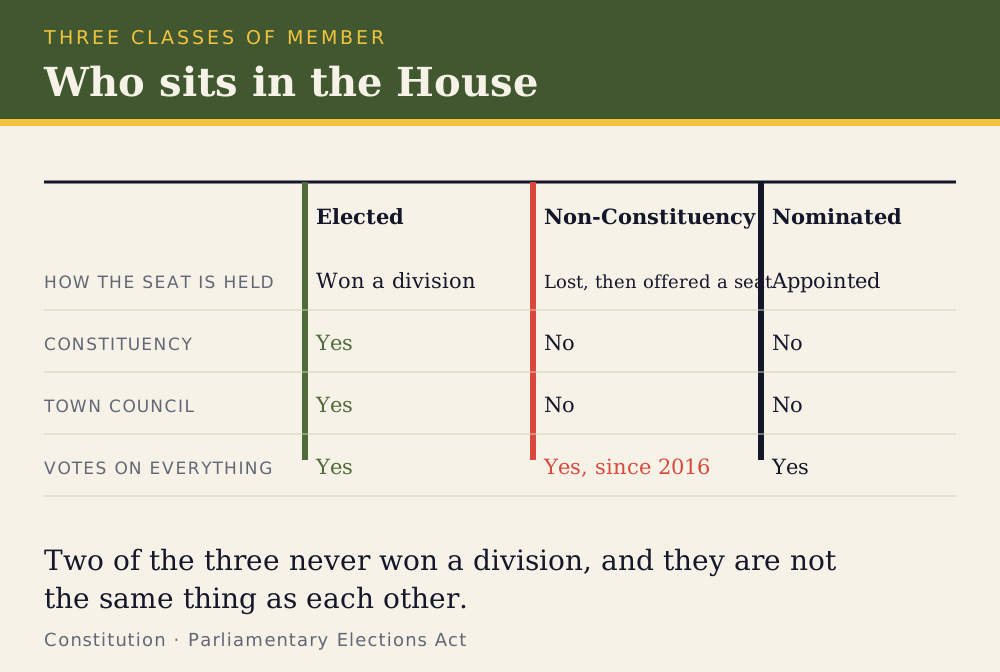
seat offered to a defeated candidate was introduced to put a floor under opposition presence.
A rule costing an MP their seat the day they leave their party removes floor-crossing
entirely. Each solves what it was meant to solve, and each has a second effect that is argued
about — usually by the same people who agree on the first.
So every entry below does the same three things in the same order: what the device is, what it
was introduced to do, and what else it does. Where a figure appears it comes from the
parliamentary record, the elections department or the boundaries report for that election, and
the entry says which.
The order is deliberate but not binding. The group constituency comes first because the
unelected seats and the party structure both make more sense once it is clear how a division
is won. Read straight through, the seven entries are the Singapore political system in the
order that makes it legible.